Keyword Cannibalization Detection
When multiple pages on your site start competing for the same search query, performance can suffer. Instead of one strong page consolidating authority and capturing clicks, Google is left to choose between several similar options. The result is often diluted visibility, unstable rankings, and missed organic traffic opportunities.
Click Raven helps you identify these conflicts automatically using your Search Console data, so you can spot where pages may be undermining each other before the problem grows.
No credit card. Connect your Google Search Console in seconds.
How it works
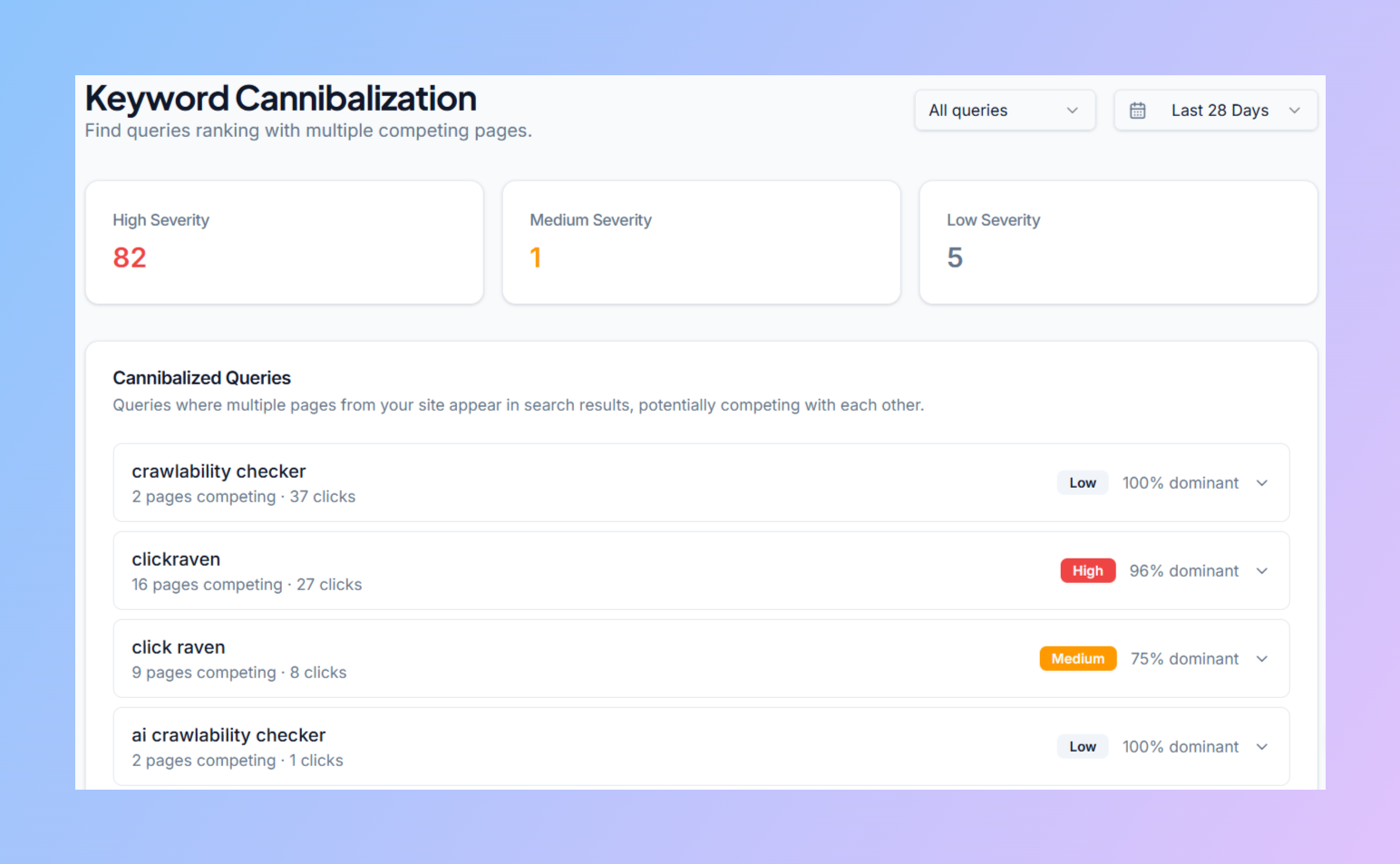
Click Raven analyzes your search performance data to detect queries where more than one page is competing for visibility. It then highlights the affected pages and shows you where search equity may be split across multiple URLs instead of being concentrated on the page most likely to perform best.
This gives you a clearer view of where overlapping intent, duplicated targeting, or unclear site structure may be weakening your SEO performance.
What you can see.
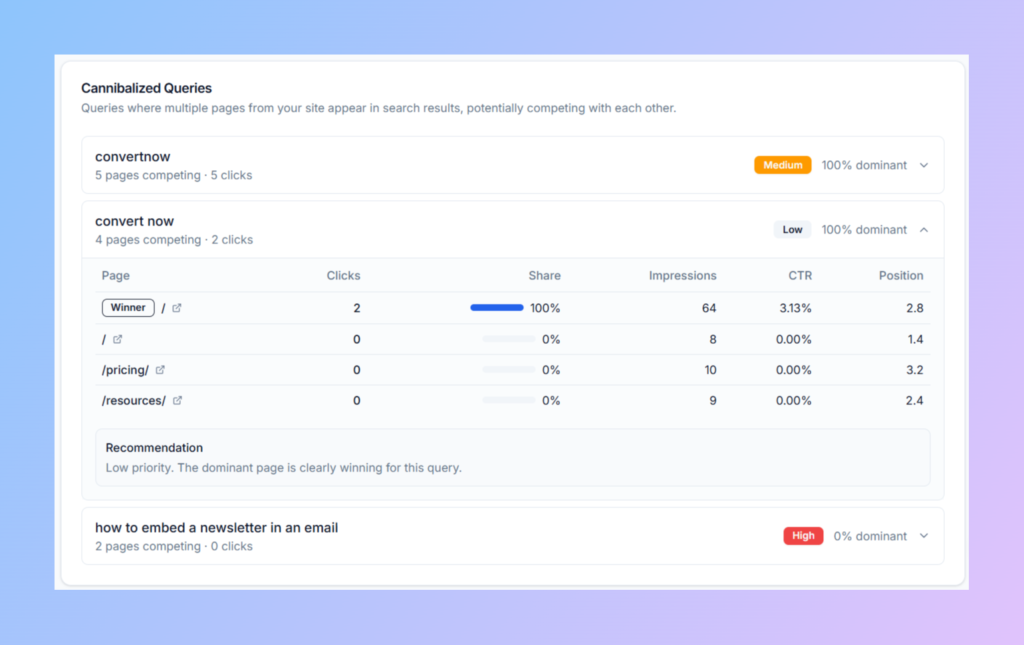
For each cannibalization opportunity, you can review the pages involved and compare how they are performing against the same query. This includes key search metrics such as clicks, impressions, CTR, and average position, so you can quickly understand which page is leading, which pages are overlapping, and where attention is needed.
You also get a clear view of how search visibility is distributed across competing pages, making it easier to assess whether the issue is minor, emerging, or already affecting performance at scale.
Why fixing keyword cannibalization is important
Diluted ranking potential
When several pages target the same query, Google has to decide which one to prioritize. That often weakens the ranking strength of all competing URLs instead of allowing one page to perform at its full potential.
Missed organic traffic
Cannibalization can limit clicks, impressions, and overall search visibility. Instead of consolidating authority into one strong result, traffic opportunity gets spread too thin across multiple pages.
Weaker SEO decisions
Without a clear view of overlap, teams may continue publishing, updating, and internally linking pages in ways that increase competition. This makes it harder to prioritize the right pages and build a focused SEO strategy.
Frequently Asked Questions
Keyword cannibalization is fixed by finding pages that compete for the same search term and choosing which page should be the main ranking URL. From there, you can consolidate overlapping content, improve internal linking, refine page targeting, merge weaker pages into stronger ones, or use redirects where needed. The goal is to give Google one clear, authoritative page for each important topic.
The four main types of keywords are informational, navigational, commercial, and transactional. Informational keywords are used when someone wants to learn. Navigational keywords help users find a specific brand or website. Commercial keywords show comparison or research intent before a decision. Transactional keywords signal that the user is ready to act, such as buying, booking, or signing up.
A common example of keyword cannibalization is when two or more pages on the same site target the same keyword, such as “email marketing software.” Instead of one page ranking strongly, Google may split visibility across multiple URLs or keep rotating which page appears. This can dilute authority, weaken rankings, and reduce overall traffic potential.
Yes. Keyword stuffing can hurt SEO because it creates a poor reading experience and sends low-quality signals to search engines. Repeating the same phrases unnaturally does not improve rankings and can make content less trustworthy. Strong SEO content uses keywords naturally while staying focused on clarity, relevance, and search intent.