
Last Updated on June 29, 2026 by Jacklyne Achieng’
SEO work demands high levels of focus and organization. Professionals often struggle to keep physical and digital workspaces clean to maintain deep concentration.
Creating an effective environment helps manage complex tasks and tight deadlines. Clear spaces lead to clear thinking for better results.
Maximizing Your Workspace Efficiency
A clean desk acts as the foundation for daily operations, serving as the launchpad for your most complex SEO strategies. Simple, consistent actions such as clearing away loose papers and managing digital clutter improve your speed and accuracy when handling massive data sets.
A clutter-free environment allows teams to work more efficiently. You gain clarity when your physical space reflects the order required for deep work.
Keeping a clear surface reduces mental fatigue during long projects where focus is paramount. Constant visual noise pulls your attention away from critical SEO analysis or keyword research tasks that require absolute concentration.
Clearing the area creates a calm setting for intense work sessions. When your eyes stay off stacks of paper, your brain finds it easier to stay locked onto the screen.
Optimizing Physical Storage Solutions
Physical files and equipment still play a role in many modern offices, even in digital-first roles. When space becomes tight, you might need to look for external options like storage units West Belfast to keep your main work area functional. Managing your inventory properly frees up the room you need to focus on digital strategy and client results. You regain control over your office when you move excess items to a secure space.
Many professionals underestimate how much space physical clutter takes up in a home office or professional suite. Boxes of marketing materials, trade show props, or outdated tech equipment often sit idle for months, occupying valuable floor space.
These items block creative flow and lower your overall morale throughout the work week. Removing them clears the path for better productivity.
Storing these items offsite keeps the office open and airy, allowing for better air circulation and movement. You gain room to move around your desk without losing access to necessary supplies or reference materials.
Managing Equipment And Assets
Business growth often leads to an accumulation of assets that can quickly crowd out your workspace. Tech gear, large monitors, cables, and various testing tools require a dedicated home to prevent damage and unnecessary loss.
Having ample space allows businesses to organize equipment effectively and reduce downtime. Taking the time to store items correctly ensures that when you need a specific tool, it is ready to perform.
An organized inventory system tracks assets and prevents replacement costs, saving your budget for more important investments. You save money by knowing exactly where every piece of hardware stays, rather than buying duplicates you already own but cannot find. Tracking assets helps identify what hardware needs an upgrade or what has reached the end of its life cycle. Clarity regarding your equipment is power.
Designating a specific spot for tech gadgets keeps cords tidy and tangle-free. Massive piles of messy wires distract from the task at hand and create a sense of chaos. Keep your gear ready for immediate use by assigning every cable and adapter a specific bin.
Establishing A Routine For Focus
A set schedule acts as a guardrail for your day, making sure you stay on track despite the chaos of the SEO industry. Daily tasks range from technical audits to complex content planning, which requires jumping between different mental modes. A recent blog noted that a routine helps create a healthy cadence of events. Consistency provides a predictable structure for your brain.
Structure protects your energy levels by removing the need to decide what to do next. Time blocking allows you to tackle the hardest tasks when you feel most alert and creative. Morning hours often work best for deep technical analysis, and afternoons are reserved for emails or routine updates. Planning your hours ahead of time changes your output.
- Schedule deep work in 90-minute blocks to avoid burnout.
- Take short breaks to refresh your mind away from the screen.
- Group similar tasks together to maintain mental momentum.
Organizing Your Desk For Performance
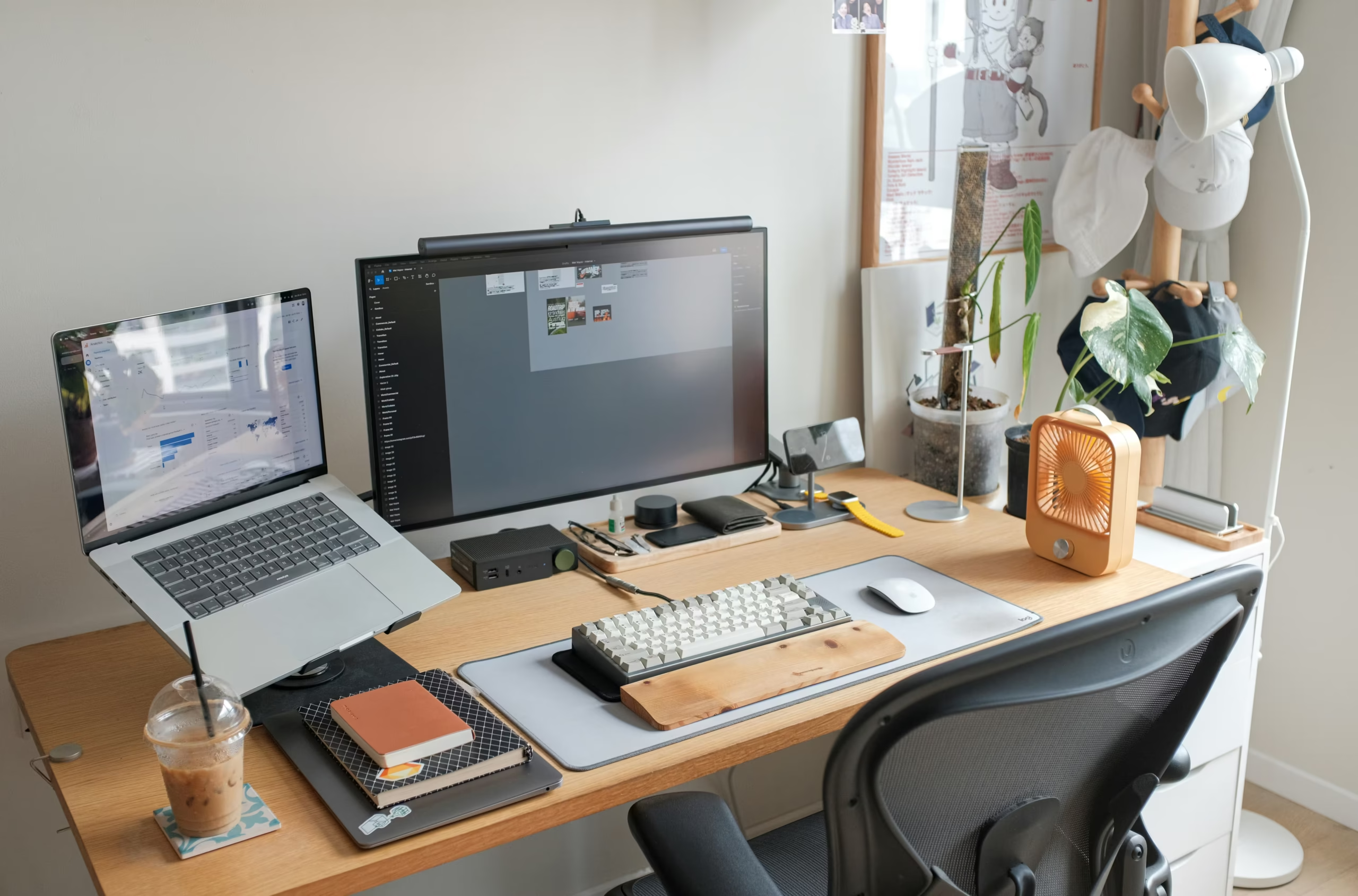
Your desk serves as your primary station for success and demands careful attention to layout. Your setup should match your specific needs, whether you focus on data analysis or creative copywriting for client campaigns. A guide suggested that a decluttered desk makes it easy to optimize every square foot of your office space. Every item on the surface should have a clear purpose.
Placement of monitors and input devices impacts your physical comfort during long sessions of data entry or coding. Ergonomic choices prevent strain and keep you working for longer periods without pain or fatigue. Small adjustments to your seat height, mouse position, and screen alignment provide immediate relief for your neck and back.
Good lighting plays a major role in how you perceive your work and your general energy levels. Natural light improves mood and alertness throughout the afternoon, helping you push through complex tasks. Position your station near a window if possible to keep your circadian rhythm balanced. If natural light is unavailable, use high-quality lamps that mimic daylight.
Reducing Distractions In The Home Office
Remote work brings a set of challenges that traditional office settings do not encounter, specifically the blurring of boundaries. Maintaining clear lines between personal life and professional duties helps keep your mindset sharp and your focus undivided. An article in a home business magazine claims that the best organizational setup reduces distractions and improves your daily workflow. Boundaries create a safe space for deep work.
- Keep non-work items in a separate room or a dedicated cabinet.
- Use noise-canceling headphones for deep focus during high-pressure deadlines.
- Establish a clear start and end time for your workday.
Personal touches bring comfort, but should not clutter the view of your workspace. A single plant or a framed picture helps without becoming a distraction that pulls your focus away. Keep the surface area clear for active projects and notes to maximize your focus. A minimalist approach allows you to dedicate your mental bandwidth to your clients and their success.
Consistent effort in creating your environment leads to better work. Small tweaks to your physical space and your daily schedule make a difference.
Commit to these changes to see improvements in your output. A well-organized life supports your career goals over the long term.