Last Updated on May 6, 2026 by Click Raven
A false fraud accusation goes viral on Twitter at 11 pm. By morning, your stock is down 20% and yet your SEO dashboard shows nothing unusual. Keyword rankings are stable. Backlinks look clean. Google Search Console has no alerts. Traditional SEO tracking had no visibility into what just happened, and that’s the problem.
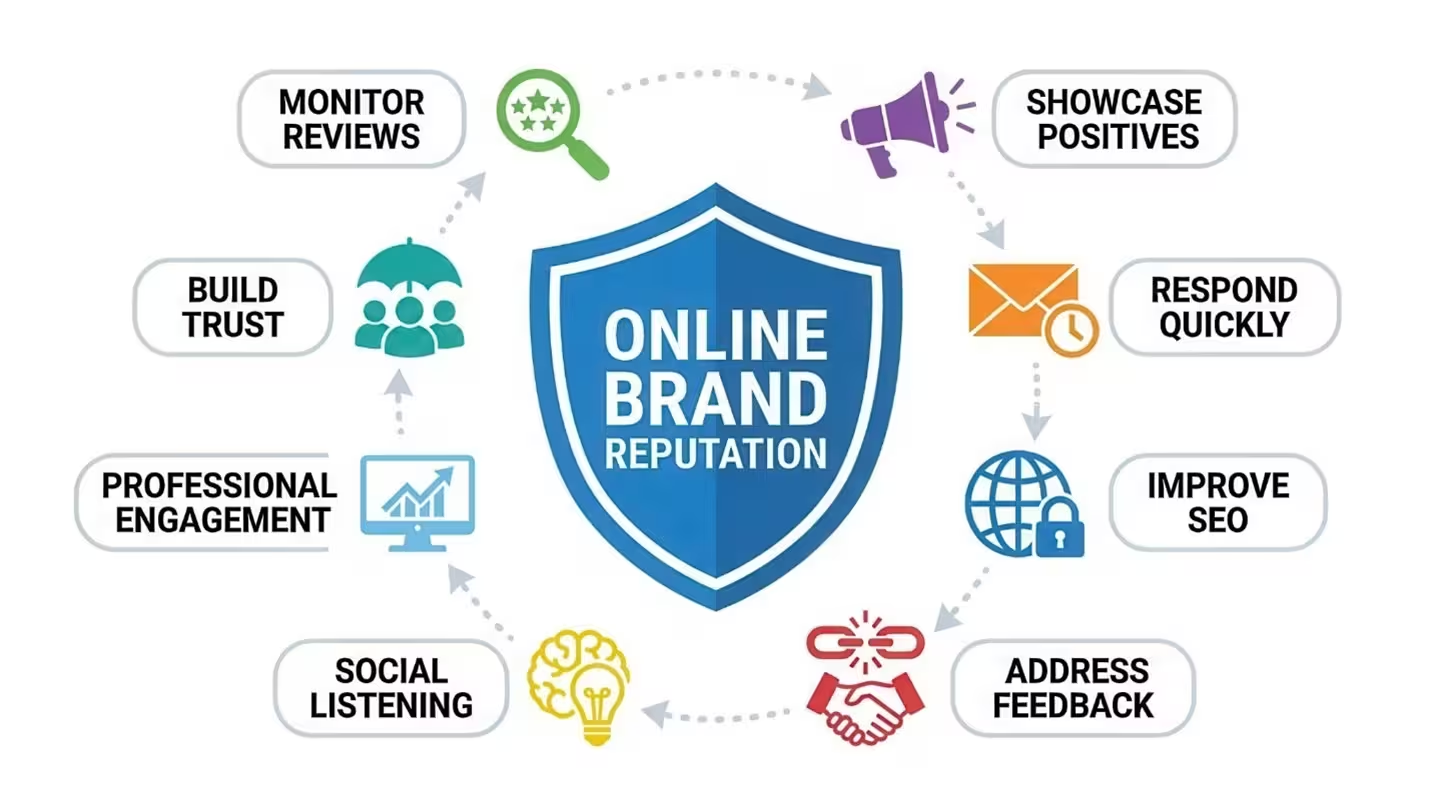
Reputation monitoring services track what SEO tools aren’t built to track: brand sentiment across social media, forums, review platforms, and unindexed web sources where reputation damage forms before it ever touches a search ranking.
What Are Reputation Monitoring Services
Reputation monitoring services are tools and managed programs that track brand mentions, customer sentiment, and crisis signals across social media platforms, review sites, forums, and search results in real time. The defining characteristic that separates them from traditional SEO tracking is their focus on sentiment and brand perception rather than ranking metrics.
SEO tracking tools like Ahrefs, SEMrush, and Google Search Console are built to answer questions about search visibility: where do pages rank, which keywords drive traffic, and which backlinks point to the site? These are the right tools for such kind of questions. However, they are the wrong tools for detecting a coordinated review attack on Google Business Profile, a viral negative thread on Reddit, or a defamatory post spreading through LinkedIn.
Quick Comparison Between Reputation Monitoring And SEO Tracking
| Aspect | Traditional SEO Tracking | Reputation Monitoring |
| Core Focus | Organic rankings, keyword positions | Brand sentiment, online perception |
| Key Risks Addressed | Duplicate content, backlink penalties | Fake reviews, PR crises, social attacks |
| Primary Tools | Google Search Console, Ahrefs, SEMrush | Social listening platforms, sentiment AI |
| Data Sources | Indexed web, crawlable content | Social media, forums, review sites, unindexed content |
| Alert Type | Ranking drops, crawl errors | Sentiment spikes, mention volume changes |
Why Traditional SEO Tracking Misses Brand Threats
The reason traditional SEO tracking misses reputation threats is structural. SEO tools index what search engines index. They measure ranking signals. They don’t measure what people are saying about your brand on platforms that aren’t driving indexed traffic.
A thread on Reddit accusing a brand of deceptive billing practices may never rank on page one of Google. It may have no backlinks worth monitoring. A standard SEO audit will never surface it. But it will be seen by thousands of people who search for the brand’s name on Reddit directly or encounter it through social sharing, and it will influence how they think about the brand long before any SEO metric shifts.
The same applies to fake reviews on Google Business Profile, targeted complaints on Trustpilot, and negative sentiment spreading through private or semi-private social channels. Each of these affects customer trust and purchasing decisions. None of them show up in keyword position reports or backlink audits.
Negative SEO attacks, specifically spammy backlinking, content duplication, and search engine poisoning tactics, fall into a middle category. They can eventually affect SEO performance, but their early warning signs are often detectable through sentiment monitoring before they trigger measurable ranking drops.
The Reputation Threats Missed by Traditional SEO Tracking
The six most common reputation threats that traditional SEO tracking consistently misses but reputation tools catch first:
- Coordinated fake review campaigns targeting Google Business Profile or Trustpilot
- Viral negative content on Reddit, Twitter, or LinkedIn that spreads through social sharing rather than search
- Brand impersonation accounts on social platforms that generate confusion and complaints
- Forum threads and community discussions where negative brand narratives form outside indexed search
- Malware or SEO poisoning is injected into the site infrastructure that compromises brand-adjacent content before Google flags it
- Competitor-driven disinformation that spreads through social channels and AI-generated summaries
Each of these can cause significant revenue and reputational damage. None of them is reliably detectable through standard SEO tooling.
How Reputation Monitoring Services Work
Reputation monitoring services operate through three core functions: continuous multi-channel listening, AI-driven sentiment analysis, and real-time alerting with actionable context.
Multi-channel listening
This means scanning social media platforms, review sites, news sources, forums, and AI-generated search summaries simultaneously. Tools like Brandwatch and Mention use keyword-based queries to pull brand mentions from thousands of sources, including platforms that don’t provide public APIs and require scraping or partnership access. The coverage extends well beyond what any SEO tool monitors.
Sentiment analysis
These tools use natural language processing to classify each mention as positive, negative, or neutral, and to identify the specific topics driving each sentiment category. A spike in negative mentions of “customer service” tells a different story than a spike in negative mentions of “product quality,” and the response strategy differs accordingly. AI-powered tools process this at a volume that manual monitoring cannot approach.
Real-time alerting
Findings are delivered to response teams when specific thresholds are crossed. For example, when negative mention volume increases by 30% within a four-hour window, or when a specific keyword like “lawsuit” or “fraud” appears in conjunction with the brand name. The alert gives the team context: which platform, what volume, what sentiment, and which sources are driving it.
Specific Benefits of Reputation Monitoring Services Over Traditional SEO Tracking
Early crisis detection
The economic value of catching a crisis early is substantial. These tools can identify a reputation threat at 50 mentions rather than 50,000. At 50 mentions, a brand has response options: engage on the platform, issue a clarification, or work with the source directly. At 50,000 mentions, the narrative has already formed, and counter-messaging is fighting an uphill battle.
NetReputation has documented that brands with monitoring infrastructure in place at the time a crisis hits contain the damage faster and at lower cost than those that respond reactively.
Real-time sentiment visibility
Reputation monitoring services provide a continuous read on how customers, journalists, and potential buyers perceive the brand. This is different from what review scores measure.
A brand can have a 4.3-star average on Google and simultaneously have a spreading narrative about a specific product defect that’s generating significant negative social conversation. The star rating won’t reflect the social conversation for weeks but sentiment monitoring reflects it immediately.
Multi-channel coverage
They capture what’s happening on platforms that SEO tracking doesn’t prioritize. Reddit discussions, Twitter threads, LinkedIn posts, niche industry forums, and AI-generated search summaries that aggregate brand sentiment from multiple sources. SEO tools monitor factors that affect search rankings, reputation tools monitor what affects brand perception.
What to Look for When Choosing a Reputation Monitoring Service
The right service depends on the brand’s size, industry, and risk profile in different channels. A regional business dealing primarily with Google Business Profile reviews has different needs than an enterprise brand managing reputation across global markets and AI search environments.
These are the capabilities worth evaluating:
- Social media listening that covers Twitter, Reddit, LinkedIn, Instagram, and Facebook, with real-time alert speed
- Review platform monitoring across Google Business Profile, Yelp, Trustpilot, and industry-specific review sites
- Sentiment analysis with topic-level classification, not just positive/negative scoring
- Integration with existing tools like Google Analytics, Google Search Console, and CRM systems for correlated reporting
- AI-generated content monitoring that tracks how AI search systems describe the brand in generated responses
- Customizable alert thresholds that can be tuned to the brand’s risk profile.
Risks of Relying on SEO Tracking Alone
Brands that rely exclusively on SEO tracking for brand monitoring face compounding risks.
Manual Google penalties for spammy backlinks or content duplication will eventually show in Search Console, but the damage to organic traffic can be significant before the flag appears.
More importantly, the brand reputation damage that often accompanies these attacks, negative press, social backlash, and competitor-driven disinformation may be well advanced before any SEO metric shifts.
Fake review accumulation on Google Business Profile directly affects conversion rates for local searches and influences the knowledge panel that appears for branded queries. Traditional SEO audits don’t scan content on review platforms. A brand can watch its local search ranking hold steady while its review profile is being systematically degraded.
PR crises that originate on social media or in forum communities often receive mainstream media coverage before any SEO signals are affected. By the time a negative story ranks in Google for a brand’s name, it has already been circulating for days or weeks in the channels that reputation monitoring covers.
Strategic Choice: Combining Reputation Monitoring with SEO Tracking
The practical recommendation isn’t to replace SEO tracking with reputation monitoring. It’s to run both in parallel, because they cover fundamentally different threat surfaces.
SEO tracking protects search visibility. Reputation monitoring protects brand perception. These are related but distinct objectives, and gaps in either create vulnerability.
For brands in high-stakes categories: financial services, healthcare, consumer products with safety implications, or any category where a single viral incident can trigger significant revenue damage, the cost of reputation monitoring is directly justified by the crisis containment value it provides.
For brands in lower-risk categories, basic monitoring with tools like Google Alerts and Brand24, supplemented by regular manual checks across key review platforms, provides a meaningful baseline even without enterprise-grade monitoring infrastructure.
The starting point for any brand is understanding what channels they’re most vulnerable on, which means knowing where their customers talk about them, where competitors are most active, and where negative narratives historically originate in their industry. Reputation monitoring services are most valuable when configured around those specific risk vectors rather than deployed as generic brand surveillance.