

Last Updated on September 15, 2026 by Click Raven
Here’s something I run into constantly. Someone picks a topic, writes it up, hits publish, and then just waits, hoping it does well. There’s no plan behind any of it, and that’s usually where things fall apart.
You don’t need a bigger budget or a fancy new tool to fix this. What you need is to just open up the audience data already sitting in your analytics account, probably collecting dust.
So, what’s audience data, really? It records the actions of real visitors to your website, such as what they typed to get there, how far they scrolled, what they clicked, what they ignored, and when they closed the tab.
It’s not at all difficult. Use that data, and content stops being a gamble. You can see what people want, what they’re looking for, and where your current content falls short.
That leads to pages people are more likely to click, read, and return to, and those are the outcomes a stronger SEO strategy is built around.
Where Does Audience Data Come From?
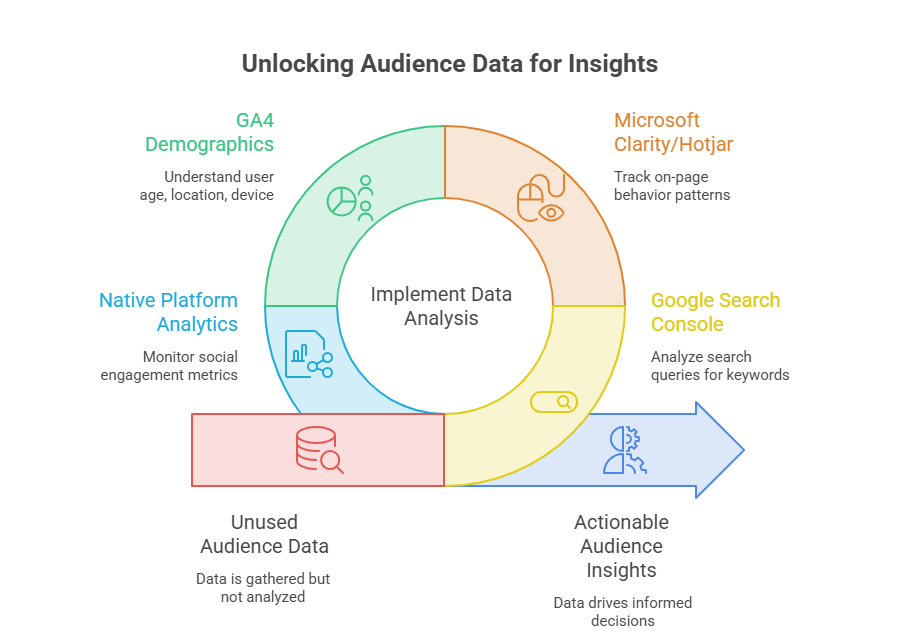
Self-Generated
There’s a good chance your site is already gathering most of this. You’re just not looking at it yet.
| Type of Audience Data | Where It Comes From | What It Tells You |
| Search queries | Google Search Console | The exact words people type to find you |
| On-page behavior | Microsoft Clarity or Hotjar | Where readers slow down, skim, or leave |
| Click-through rate | Search Console and GA4 | Which titles get clicked |
| Demographics | GA4 | Age range, location, device people use |
| Social engagement | Native platform analytics | What gets shared or talked about |
| Returning vs new visitors | GA4 | Whether people return or leave for good |
Knowing where it comes from is the easy part. Doing something with it that’s where most people stop.
How Audience Data Shapes What You Write
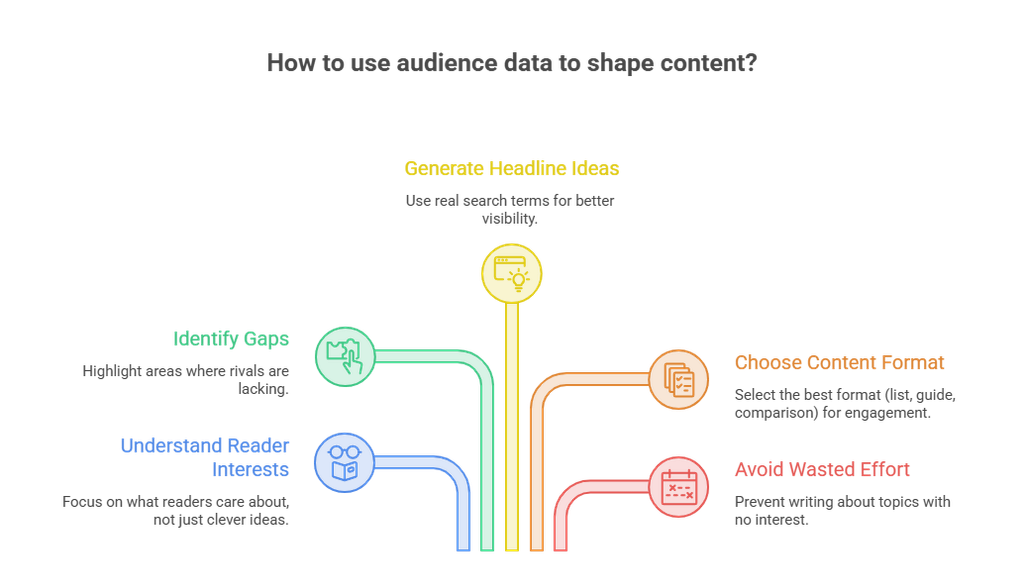
Content built on a hunch rarely holds up for long. Audience data changes that in a few simple ways:
- Shows what readers care about, not what sounded clever in a meeting.
- Highlights the gaps that rivals haven’t been able to fix.
- Provides you with headline ideas that correspond with the real search terms consumers use.
- Tells you whether a list, a guide, or a straight comparison will land better.
- Prevents you from wasting a week writing about something that no one is looking for.
People linger on a page longer when your writing reflects what they genuinely want.
It’s worthwhile to know how high-retention brands handle their content ecosystem differently. Their websites approach this as a system rather than an isolated incident. And that’s what search engines look at when determining if your page merits a higher ranking.
Self-Generated
How Audience Data Improves Your SEO
In the past, SEO often meant picking your keywords, working them into a page, and crossing your fingers.
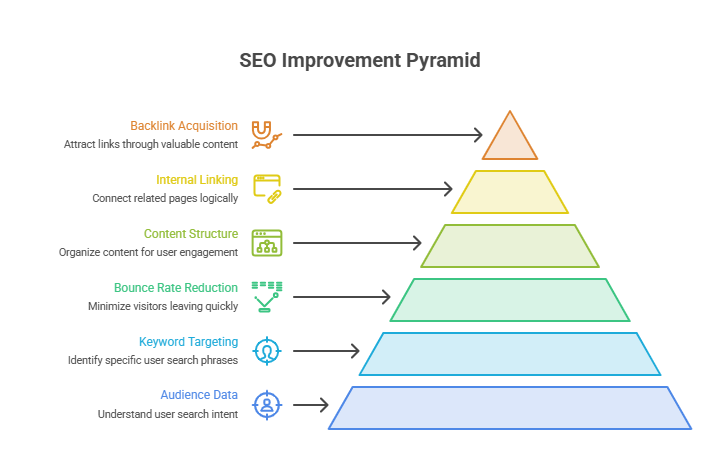
It no longer operates that way. Now, it’s all about purpose, and the best way to determine what a person truly wants when they type a search into that box is to look at audience data.
This becomes even more useful as people turn to AI assistants for information. Similarweb’s AI Brand Visibility helps marketers see which topics drive brand mentions, understand the prompts behind those searches, and identify the sources influencing AI-generated answers. It also lets brands compare their visibility with competitors and see where opportunities exist to strengthen their presence.
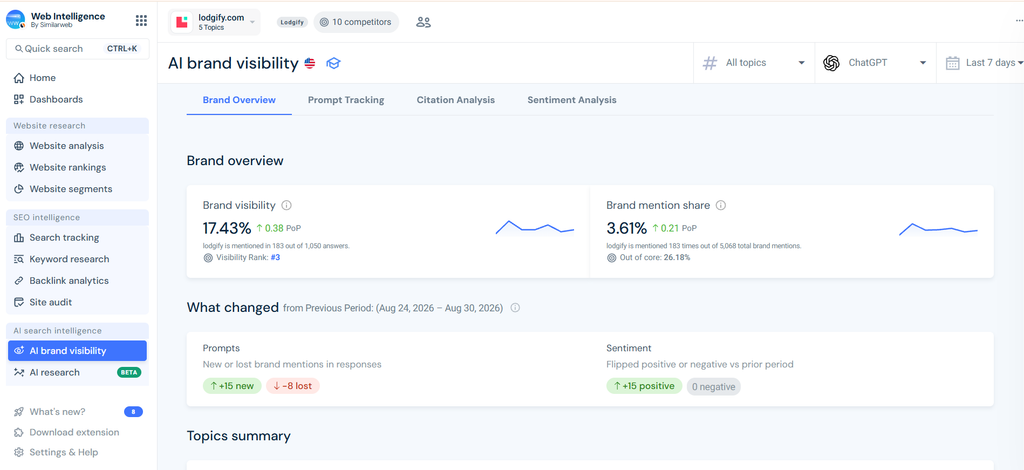
For SEO teams, these insights from AI brand visibility can help you:
- Sharper keyword targeting: You’ll find the exact phrases people use, including the longer and oddly specific ones you’d never think of on your own. Those specific searches can bring in more qualified readers.
- Fewer people bouncing off: When visitors leave fast, treat it as a warning. A quick bounce is also a confidence signal; it tells you a page didn’t earn the readers’ trust, and there are ways to measure customer trust directly instead of only inferring it from analytics.
- A tighter structure: Behavior data shows where people give up. Move your strongest point higher; cut whatever pushes people to leave before they reach it.
- Internal links that make sense: Once you see which pages people read together, linking between them stops feeling forced.
- Backlinks that show up on their own: Write more of what already gets shared, and links tend to arrive without you chasing anyone.
Self-Generated
How Content Metrics Connect to SEO Results
Here’s a rough sketch of how the everyday content numbers connect to your SEO.
| Content Metric | Related SEO Impact |
| Time on page | Signals to search engines that the content is worth reading |
| Scroll depth | Shows whether your structure fits what readers need |
| Click-through rate | Helps visibility and ranking build over time |
| Social shares | Raises your odds of earning real backlinks |
| Return visits | Builds trust and authority for the whole site |
Content and SEO were never two separate jobs; they move together, as long as both are guided by the same audience data.
To turn those numbers into a repeatable process, it helps to lean on the best web analytics software for SEO teams so the reports practically read themselves.
How to Put Your Audience Data to Work
For any of this, a large staff and pricey software are not necessary:
- Instead of just once a month, review your metrics every week.
- Arrange your top-performing pages in a line and see what they have in common.
- Pull new ideas straight out of your search query reports.
- Test two headlines on the same post and see which one wins.
- It pays off when you update older content with what audience analytics is currently showing you. Marketers can experience up to 106% boost in organic traffic from upgraded sites after improving previous content.
You don’t need hours to do this. A consistent weekly review is enough to make audience data a part of how you plan and improve content.
Improve Content and SEO Performance With Audience Data
You can’t just look at audience data and put it away. It reveals what readers truly require, where they become impatient, and why some of them return.
Build your content around that, and greater SEO usually follows not because you figured out an algorithm trick, but rather because you knew who was reading it.
Pull up one report this week. Let it shape whatever you write next. See what happens.
Ready to turn that data into rankings without the guesswork? Try Click Raven and let your Search Console data show you where your next win is hiding.