

Last Updated on July 3, 2026 by Jacklyne Achieng’
When a boiler fails at 2 a.m. or storm debris litters a resident’s driveway, the property owner doesn’t open the Yellow Pages – they pull out a phone and type “emergency property maintenance near me.” In a space crowded by national franchises, gig-economy handymen, and well-funded regional chains, the question is simple: Will they find you first?
Local search engine optimization (SEO) is the set of processes that decide that outcome. This article walks you through the tactics that matter most in 2026 for property maintenance companies, facility managers, and digital marketers who want to win the local visibility game without burning budgets on tactics that never move the needle. We’ll keep the jargon minimal, focus on proven methods, and back up claims with recent data, not myth. Grab a coffee and let’s dive in.
The Local SEO Landscape for Home Services
Local SEO looks deceptively simple from the outside: claim your Google Business Profile (GBP), add a few keywords, collect reviews, and watch the phone ring. In reality, ranking in the “map pack” has become a data-driven, reputation-centric contest influenced by hundreds of signals and a search engine that now deploys AI-driven personalization on every query.
The 2026 BrightLocal Consumer Review Survey confirms that 97 percent of consumers now read online reviews when evaluating local businesses. That statistic alone explains why even well-established contractors can quietly drop off page one: an outdated review strategy undermines local authority faster than any technical misstep.
At the same time, Google’s algorithm updates, especially the 2024 “Vicuna” local update, shifted weight onto three pillars:
- Proximity of the searcher to the service area.
- Business relevance to the query (categories, on-page signals, structured data).
- Prominence, which bundles reviews, citations, links, and unlinked brand mentions across the web.
Knowing those pillars can help you focus on making changes that will help you improve position and clicks. The combination of proximity and prominence is a delicate one with the property maintenance company in particular, which will be servicing multiple cities from a single head office. Without explicit geography baked into site content and GBP service areas, your reach shrinks to a three-mile bubble even if your vans cover three counties.
Operational Foundations
Before we jump into on-page tweaks, remember that search visibility mirrors operational reality. If you’re fielding calls in three counties using a spiral notebook, customer satisfaction (and review volume) will suffer, no matter how slick your website looks. Modern property maintenance companies rely on property management maintenance software not just to dispatch work orders but also to sync job data with marketing.
When service tickets are closed promptly within the software, clients receive automatic satisfaction prompts. Happy tenants leave five-star reviews; those reviews feed local SEO authority. The tech stack isn’t a “marketing” expense – it underwrites your ranking strategy. If you’re still on spreadsheets, solving that gap will have a bigger SEO payoff than any keyword trick.

Building a Stand-Out Google Business Profile
Your GBP is the single richest source of localized ranking signals, effectively a mini-website that just happens to sit on Google’s servers and display above the organic results. Treating it casually is like locking the front door of your office and posting the hours on a back alley window.
Nail the Core Information
Before you think about fancy features, lock down the fundamentals:
- Business name. Resist keyword stuffing. “Oak Ridge Property Maintenance” is concise; “Oak Ridge 24/7 Emergency Property Maintenance & Lawn Care” risks suspension.
- Primary category. Pick the single service you want to rank for most often (e.g., “Property maintenance” or “Handyman”). Add secondary categories – “Lawn care,” “Plumber,” “HVAC contractor” – only if those services drive meaningful revenue.
- Service areas. List ZIP codes, not vague mileage. Each ZIP should appear somewhere on your site in crawlable text; otherwise, Google may treat the GBP entry as aspirational rather than factual.
- Hours. If you offer true 24/7 coverage, publish it. Google now highlights “Open 24 hours” in green, an eye-magnet when pipes burst at midnight.
A surprising nuance from Google’s 2025 documentation update: businesses with “by appointment only” hours can now list separate “online chat available” hours. Supporting live chat in property management maintenance software and making it known makes it easier to engage homeowners who would rather text than call.
Reputation Engine: The Review Flywheel
Local algorithms increasingly correlate review quantity, velocity, and response rate with prominence. You need a systematic approach:
- Trigger. Send a review request within two hours of closing a ticket.
- Simplify. Use a short URL or QR code.
- Respond. Respond to positive and negative reviews in 24 hours. Google not only reads words inside reviews but also scans owner responses for professionalism, which can moderate ranking penalties from bad feedback.
Pro tip: Rotate the keywords you encourage users to mention – “gutter cleaning,” “boiler service,” etc. – so your GBP accumulates natural-language proof of expertise across sub-services.
Service-Area Landing Pages That Convert and Rank
Service-area pages bridge the gap between proximity and relevance. Each page assures both Google and the homeowner that you not only service their neighborhood but understand its quirks, whether that’s clay soil causing drainage issues or century-old boilers rattling in historic districts.
Map Search Intent to Page Structure
Every page must answer two questions instantly:
“Does this company serve my precise location?”
“Can they handle the exact problem I have?”
The opening paragraph is the critical trust marker. Compare these two intros:
- “We proudly serve Maplewood.”
- “From frozen pipes in Maplewood’s Ridgeview subdivision to midsummer AC tune-ups along Oak Hill Boulevard, our technicians keep Jackson County properties safe and comfortable year-round.”
The second line embeds neighborhood context, adds service specificity, and supplies Google with long-tail phrases, all without sounding robotic. That’s the target style.
Write for Trust, Not Word Count
Avoid the temptation to crank out near-identical 300-word stubs. Instead, treat each landing page as a micro-sales letter. Include:
- A brief local anecdote (“We’ve handled dozens of storm-related roof repairs around Sycamore Lake since 2022”).
- A recent Google review from a resident in that ZIP (confirms social proof).
- Three top services and one differentiator (e.g., two-hour emergency response).
- Call out to your property management maintenance software portal for instant online booking, showcasing the convenience of 24/7.
At about 550-650 words, pages are substantial enough to please Google but not too lengthy to intimidate busy landlords. To conclude, include a small FAQ block with schema markup, which will improve the likelihood of rich snippets.
Citations and Hyperlocal Links: The Forgotten Levers
Citations and backlinks rarely excite boardrooms, yet neglecting them is like ignoring a spare tire. The 2026 Whitespark Local Search Ranking Factors report confirms that earning local link signals like mentions from community newspapers and bloggers remains a foundational competitive requirement. That authority is often the margin between slot #3 (visible) and slot #4 (invisible).
Before chasing new links, audit what you have. Inconsistent suite numbers or legacy phone lines fracture trust. A single wrong digit dilutes authority across hundreds of directories. After your core NAP is spotless, move to niche citations: National Association of Residential Property Managers (NARPM) directory, Porch, HomeAdvisor, and BuildZoom. These sites already rank well; riding their credibility adds passive exposure.
Hyperlocal links carry disproportionate weight because they verify geographic legitimacy. Easy wins include supplier “preferred contractor” pages, community sponsorships, and regional trade blogs. Provide value – write a 600-word gutter maintenance guide for the neighborhood HOA newsletter rather than begging for a link. Google’s 2025 SpamBrain update punishes obvious link swaps but rewards community education.
Remember to vary anchor text naturally: “Oak Ridge Property Maintenance winterized our units” is safer than “property maintenance, Oak Ridge.” The goal is relevancy, not a keyword billboard.
Technical SEO & Site Health: Speed, Schema, and Accessibility
A fast, error-free site doesn’t just please algorithms – it saves leads. Homeowners with a leaking ceiling won’t wait for a spinning loader. Google’s page-experience signals make site performance a ranking factor; user impatience makes it a revenue factor.
Common stumbling blocks include oversized hero images of gleaming ride-on mowers and cluttered plugin stacks that slow down WordPress. Compress every image, lazy-load galleries, and use modern formats like AVIF where possible. Aim for Core Web Vitals targets of LCP under 2.5 s, FID under 100 ms, and CLS under 0.1. Schema markup further enriches your result appearance – implement “LocalBusiness,” “Service,” and “FAQ” schema at a minimum.
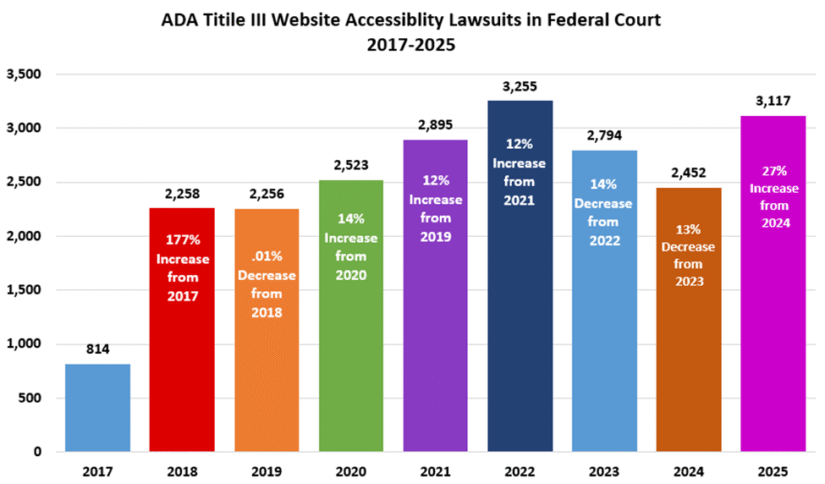
Accessibility is another under-appreciated revenue gate. Federal ADA website accessibility lawsuits jumped 27 percent in 2025, topping 3,100 cases.
More importantly, an accessible site welcomes elderly landlords with poor eyesight or tenants relying on screen readers. Before/after images have double duty with ALT text – it helps Google work out what the image is about and is also required by law.
Below is a quick reference table your developer can pin on the office wall:
| Checklist Item | Target Metric / Action | SEO Benefit | Business Impact |
| Largest Contentful Paint | < 2.5 s | Meets Core Web Vitals | Lower bounce, higher calls |
| First Input Delay | < 100 ms | Faster perceived interactivity | Smoother quote form |
| CLS | < 0.1 | Stable layout | Fewer accidental clicks |
| LocalBusiness Schema | Complete & validated | Rich results, review stars | Higher CTR |
| Alt Text Coverage | 100% of images | Semantic context | ADA compliance |
Schedule a quarterly technical audit. Even though 0.3 s of LCP may not matter to you, every little improvement adds up and makes you outperform slower competitors in algorithm recalibrations.
Tracking What Matters: KPIs and Continuous Improvement
SEO without measurement is guesswork. Yet local service providers often stare at the wrong numbers (site-wide sessions) or none at all. Instead, set up a dashboard with these KPIs:
GBP Insights
- Calls, direction requests, website clicks.
- Search terms triggering impressions.
Organic Leads
- Form submissions segmented by service-area page.
- Track drop-off from submission to job booked; marketing is only as good as dispatch.
Review Velocity
- Reviews per month vs. competitors. Aim to outpace the nearest rival by 25%.
Map-Pack Share of Voice
- Use a rank-tracking tool to monitor position 1-3 appearances across target ZIP codes.
Review these metrics monthly. If map impressions climb but calls stagnate, review snippet copy may be dull; if rankings slip while reviews stall, double down on reputation drives.
Continuous improvement means small sprints: update one underperforming service area page, solicit ten more reviews, and reclaim two broken citations. SEO is rarely about grand overhauls; it’s compound interest on dozens of micro-wins.
Conclusion
Ranking your property maintenance company in a competitive local market isn’t a mystery; it’s work. Fortunately, it’s measurable work that rewards consistency more than creativity. Start by smoothing back-office processes with property management maintenance software so you can deliver fast, review-worthy service. Harden your Google Business Profile until it feels like a digital storefront. Craft suburb-specific pages that answer real homeowner questions. Shore up citations and earn links from neighbors, not random bloggers. Finally, keep an eye on technical health and the metrics that actually correlate with phone calls.
Do that, and the next time a frantic landlord searches “emergency leak repair near me,” you won’t just appear; you’ll be the obvious, trusted choice.