Last Updated on October 4, 2026 by Click Raven
SEOs spend significant energy optimizing how content gets discovered through search. Less attention goes to how content gets consumed and retained after the first visit. Feed-based distribution is the gap in that thinking. The calendar subscription format is the most mature, widely supported, and least utilized version of it available to publishers right now.
This is not about helping a soccer coach share practice times. It is about understanding a distribution model with properties that most content operations have not thought to apply.
The Feed Model and Why It Matters for Content Distribution
Most content assets are static by design. A PDF, even one neatly assembled with a tool like PDF Hammer, an embedded schedule table, or a social post pushing an update. Each of these creates a dead-end relationship between publisher and audience. The publisher produces the asset, the audience receives it once, and any subsequent update requires the entire distribution cycle to restart from scratch.
The iCalendar format, standardized as RFC 5545 by the Internet Engineering Task Force in 2009, solves a different problem.
A calendar subscription is a live link to a machine-readable file hosted at a stable URL. The subscriber adds the URL once. Every subsequent update the publisher makes to the source feed propagates to the subscriber automatically on their next pull cycle, without any redistribution effort on either side.
The architecture is pull, not push. The subscriber’s calendar app fetches the latest version of the feed at intervals it determines independently. One feed URL serves an unlimited number of subscribers without fan-out infrastructure. There is no subscriber registry, which removes a layer of data handling complexity entirely.
For an SEO professional thinking about content distribution, the relevant properties are:
- URL stability
- automatic update propagation
- zero redistribution overhead
These are the same properties that make an RSS feed a more durable distribution primitive than a social post, applied to a format with broader native support across more platforms.
The Canonical URL as a Distribution Relationship
The feed URL in a calendar subscription functions as a permanent canonical resource. Subscribers add it once and never interact with it again directly. The publisher updates the source; the subscribers receive the update. The URL is the entire relationship.
Changing that URL breaks every subscriber’s connection simultaneously, with no redirect mechanism and no way to notify affected subscribers automatically. It is structurally identical to changing a canonical URL without implementing a redirect. The relationship built around the original address dissolves, and rebuilding it requires every subscriber to resubscribe from scratch.
For SEOs, treat the feed URL with the same permanence discipline applied to any high-value canonical resource. The distribution relationship it carries is the asset, not the individual events it contains at any given moment.
Tools like Calfeed make this concrete:
- The platform accepts plain text, a photo of a flyer, a CSV, or a public events page as input and outputs a properly formatted iCalendar feed at a stable URL.
- The publisher manages the source content; the URL persists indefinitely.
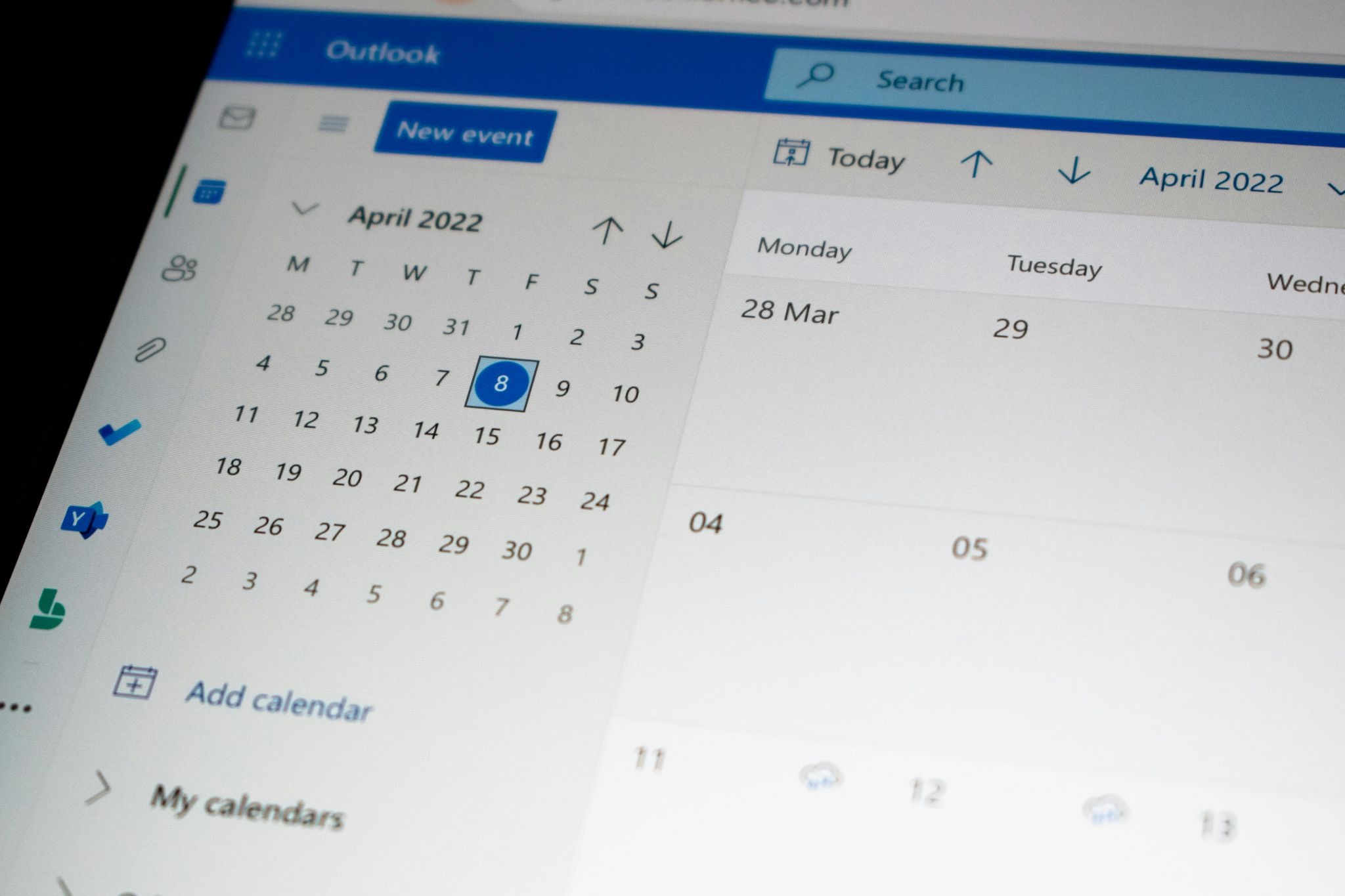
- Updates propagate to Apple Calendar, Google Calendar, Outlook, Microsoft 365, and Yahoo without any further action from anyone.
Pull Architecture and the Content Freshness Problem
One of the more instructive aspects of the calendar subscription model for SEOs is how it handles the gap between a publisher updating content and that update reaching the audience.
The pull model means refresh cadence is determined by the subscribing client, not the publisher. That cadence varies significantly across platforms:
- Apple Calendar lets users configure intervals from every 5 minutes to weekly, with weekly often the default.
- Google Calendar refreshes every 12 to 24 hours with no user-facing control over the interval.
- Outlook desktop refreshes every 1 to 3 hours.
- Yahoo Calendar holds cached versions for 8 to 12 hours between fetches.
The Google Calendar window is the most relevant constraint for anyone managing time-sensitive content. A correctly published update may not reach subscribers for up to 24 hours regardless of how quickly the source is updated. The fix for urgent changes is a supplementary direct message to subscribers, not a change to the feed itself.
SEOs who have worked on crawl budget and indexing lag for large sites will recognize the shape of this problem. The content is correct at the source. The delivery layer introduces a delay that cannot be fully controlled from the publisher side. The operational response is the same in both contexts: account for the lag in your communication plan, and do not assume that publishing equals delivery.
Where the Format Has Direct Client Applications
The consumer use cases for calendar subscriptions are well understood. The applications that are underused in professional and agency contexts are more interesting:
Local business event publishing
A business publishing a recurring event feed creates a stable, machine-readable asset that supports schema markup, feed-based aggregation, and repeat direct traffic from subscribed users. The feed is a structured data asset with a persistent URL, not a one-time content publication.
Content publisher and newsletter schedules
Media sites and newsletters that publish on predictable cadences can offer subscription feeds as a retention mechanism. A reader who subscribes to a publication schedule gets a low-friction, app-native reminder. The publisher doesn’t have to manage a push notification infrastructure or depend on social platform algorithms for distribution.
Agency and partner coordination
Multi-party campaign schedules, product launch windows, and promotional calendars distributed as a single feed replace version-controlled documents passed across email threads. One source of truth, one URL, automatic propagation to every stakeholder’s existing calendar app.
Internal publishing and reporting cadences
Sprint reviews, content publishing calendars, and SEO reporting cycles. A single internal feed eliminates the overhead of recurring manual reminders and keeps schedules synchronized across a team without requiring anyone to maintain a separate coordination layer.
The Technical Floor Is Lower Than It Looks
Building an iCalendar file manually requires adherence to RFC 5545 syntax, with properties including SUMMARY, DTSTART, DTEND, LOCATION, and RRULE for recurring events. Malformed VEVENT blocks fail validation silently in some clients and visibly in others, which creates inconsistent subscriber experiences that are difficult to diagnose at scale.
The webcal:// protocol signals to a calendar application that it should subscribe to a feed rather than perform a one-time import. Major calendar apps recognize it natively. The subscriber confirms the subscription in a single click and the feed appears as a discrete calendar layer alongside their personal calendars.
For anyone without developer resources, Calfeed abstracts the spec compliance layer entirely. The output is a properly validated feed at a stable URL, which does not require the publisher to understand or maintain the underlying syntax.
The RFC 5545 standard has been in continuous use since 1998, refined from its original RFC 2445 form and now natively supported across every major calendar platform.
The interoperability that this standard provides is the reason a single feed URL works across Apple, Google, Outlook, Yahoo, and dozens of third-party applications without transformation or middleware. That level of cross-platform support without an intermediary layer is genuinely rare in the content distribution space.
Troubleshooting the Gaps
Two failure modes appear consistently in calendar feed implementations:
Slow update propagation
This is almost always a client-side caching issue rather than a feed problem. Google Calendar’s 24-hour ceiling is the most common source of subscriber complaints. A manual refresh triggers an immediate fetch on most apps. Unsubscribing and resubscribing forces a clean pull from the source URL. It is the most reliable diagnostic step when standard troubleshooting does not resolve the issue.
Time zone misconfigurations
This causes events to drift by hours and makes them easy to misattribute to feed errors. RFC 5545 stores event times in coordinated universal time and delegates local conversion to the subscribing client. Cross-referencing against a known-good client isolates whether the problem is in the feed or in the subscriber’s local settings.
What the Format Demonstrates About Durable Distribution
The calendar subscription model has operated on an open standard for over 25 years. It is natively supported across every major platform, stateless, horizontally scalable, and built around a URL permanence model that SEOs are already equipped to reason about.
The properties that make it useful for distributing event schedules are the same properties that make it an underused option for any publisher managing time-sensitive, recurring, or updateable content:
- a stable canonical URL
- automatic update propagation without redistribution overhead
- a format every major platform already knows how to consume
Most content distribution strategies in SEO end at discovery. Calendar subscriptions extend that thinking by providing a production-ready mechanism for what happens after discovery, leveraging infrastructure that already exists on every subscriber’s device.
Whether the feed is built manually to spec or generated through a tool like Calfeed, the operational principle is the same: own the URL, maintain the source, and let the pull architecture do the distribution work.